
អំណោយពីមេឃ៖ រឿងនិទានគ្រាប់ស្រូវ

កាលពីព្រេងនាយ មានភូមិតូចមួយស្ថិតនៅជ្រលងភ្នំ គឺសម័យដែលមនុស្សមិនទាន់ស្គាល់ស្រូវអង្ករនៅឡើយ។ ពួកគេរស់នៅដោយបរិភោគផ្លែឈើ និងឫសឈើ ដែលងាយស្រួលរក។
Long ago, there was a small village nestled in a valley, a time when people did not yet know of rice. They lived easily by consuming fruits and roots that were simple to find.
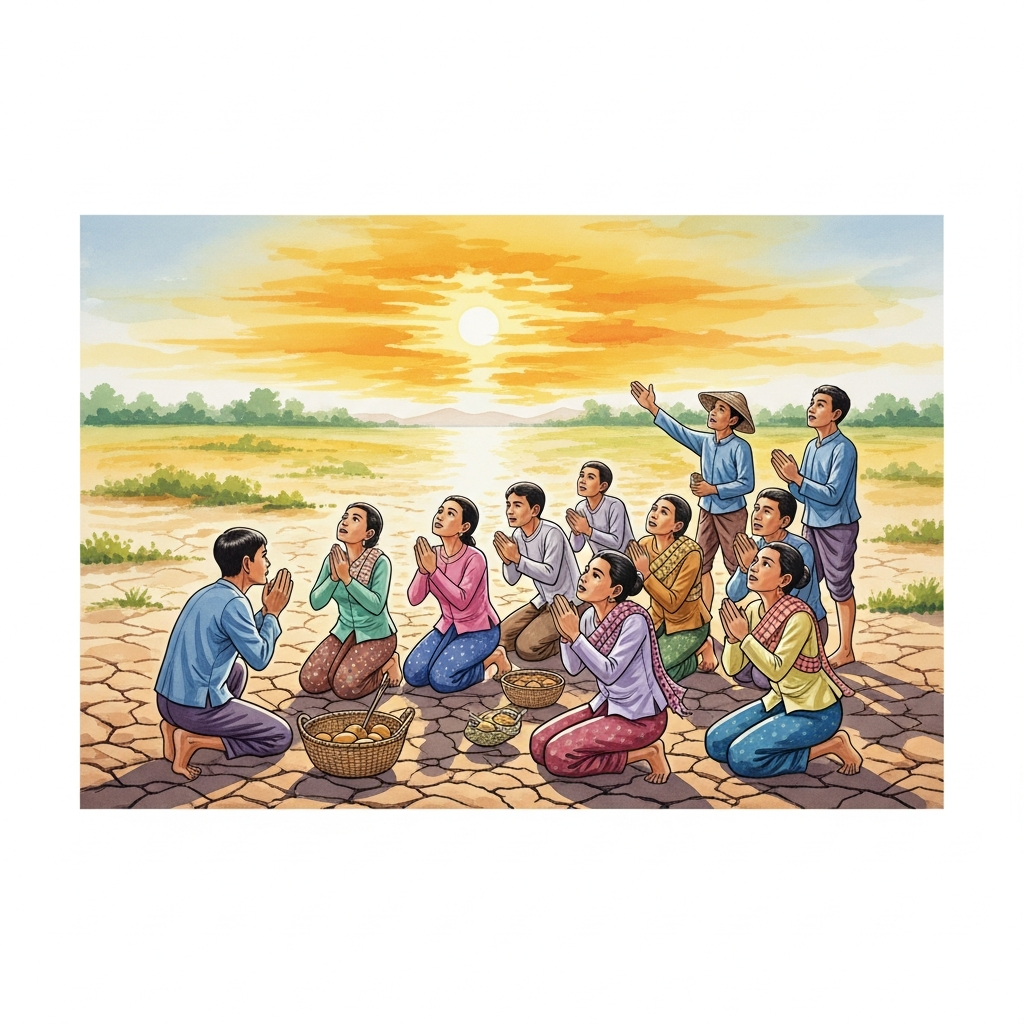
ទោះជាយ៉ាងណា អាហារទាំងនោះមិនអាចចិញ្ចឹមក្រពះបានយូរឡើយ។ ភាពអត់ឃ្លានតែងតែមករំខាន។ អ្នកភូមិទាំងអស់បានប្រមូលផ្ដុំគ្នា ហើយអធិស្ឋានសុំម្ហូបអាហារមួយប្រភេទដែលអាចរក្សាជីវិតបានយូរអង្វែង។
However, those foods could not sustain their bellies for long. Hunger often interrupted their lives. All the villagers gathered and prayed for a type of food that could sustain life for a long time.

ព្រះឥន្ទ្រនៅស្ថានសួគ៌បានឮនូវការអង្វរកររបស់ពួកគេ។ ទ្រង់មានការអាណិតអាសូរចំពោះភាពលំបាករបស់មនុស្ស។ ព្រះអង្គក៏បានបង្គាប់ទេវតាឱ្យយកគ្រាប់ធញ្ញជាតិមួយប្រភេទ ដែលសម្បូរទៅដោយជីវជាតិ ចុះមកឱ្យមនុស្សលោក។
Indra in the heavens heard their supplications. He felt pity for the difficulties of mankind. He commanded an angel to take a type of nourishing grain down to the human world.
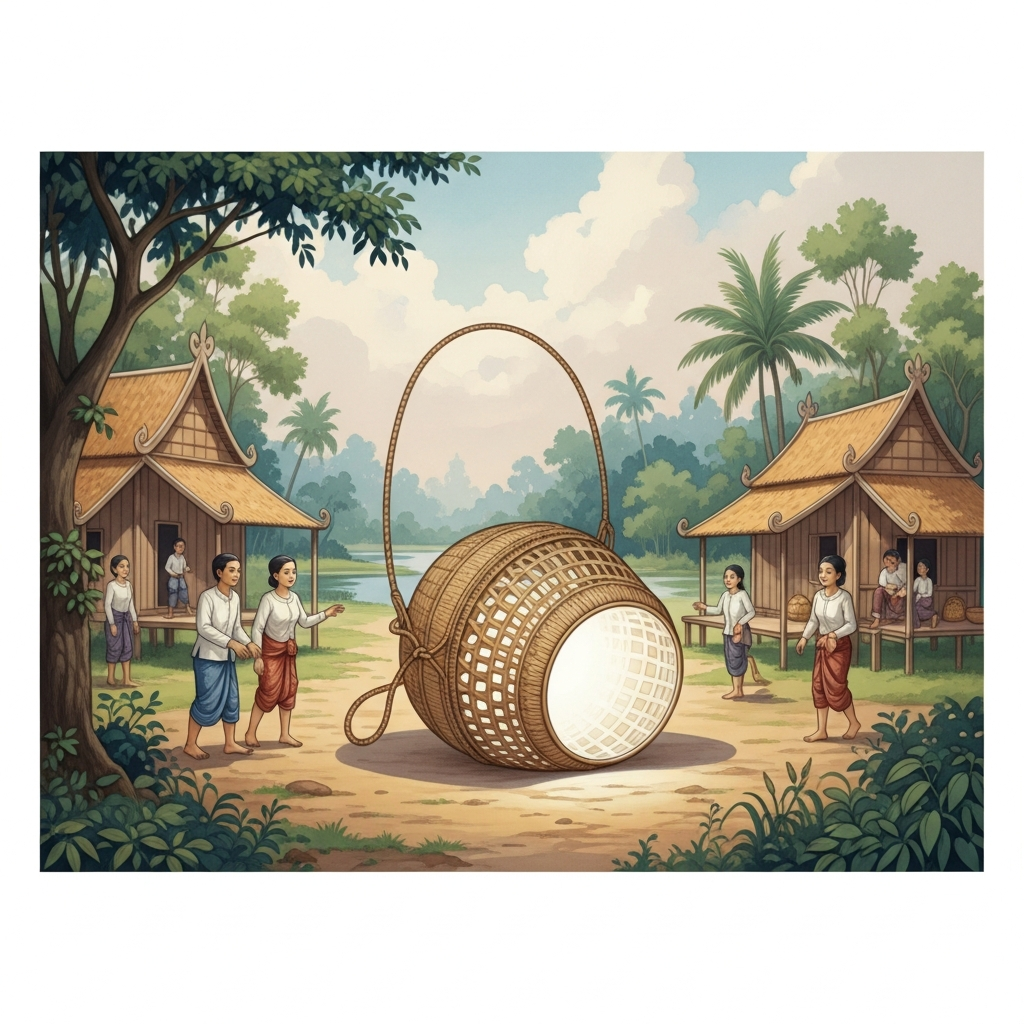
មិនយូរប៉ុន្មាន ទេវតាក៏បានទម្លាក់កញ្ចប់មួយចុះមក។ ក្នុងកញ្ចប់នោះមានគ្រាប់ធញ្ញជាតិដ៏ធំមហិមា ស ភ្លឺចែងចាំង គ្មានសម្បក ហើយមានក្លិនឈ្ងុយឆ្ងាញ់ដូចទឹកអប់។ នេះគឺជាស្រូវដំបូងបង្អស់។
Soon after, the angel dropped a package down. Inside the package were enormous, white, shimmering grains of rice, without husks, smelling as sweet and fragrant as perfume. This was the first rice.
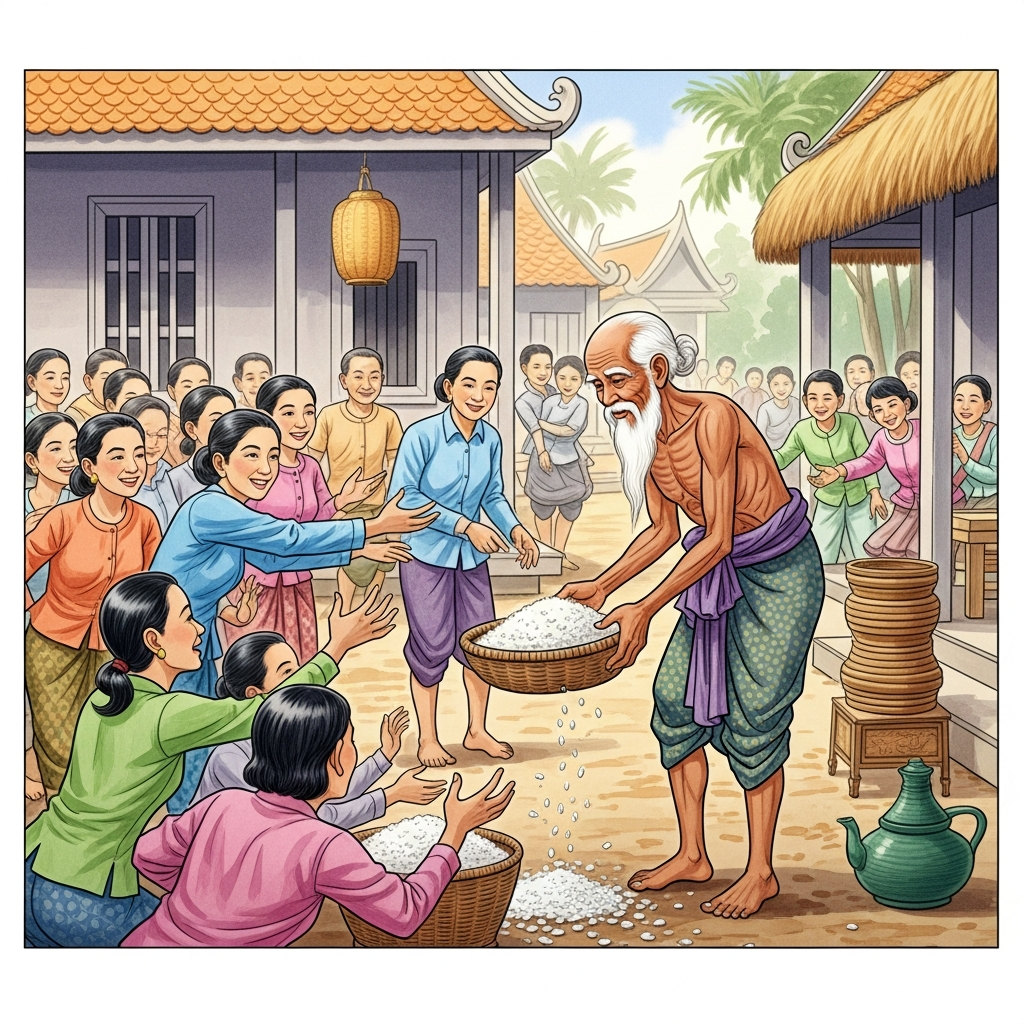
អ្នកតា មាស ដែលជាអ្នកមានប្រាជ្ញាជាងគេ បានយកគ្រាប់ធញ្ញជាតិទាំងនោះមកចែកចាយ។ ពេលបរិភោគចូលទៅ គេមានអារម្មណ៍ឆ្អែតបានយូរ ហើយមានកម្លាំងខ្លាំង។ គ្រប់គ្នាត្រេអរ រហូតភ្លេចគោរពនូវអំណោយនោះ។
Ta Meas, the wisest elder, took those grains and distributed them. When eaten, they felt full for a long time and gained great strength. Everyone rejoiced, forgetting to respect the gift.

ដោយសារភាពសម្បូរបែបពេក មនុស្សក៏ចាប់ផ្ដើមធ្វេសប្រហែស។ ពួកគេយកគ្រាប់ស្រូវមកលេង ទុកវាចោលនៅកណ្ដាលភក់ ហើយជួនកាលក៏ជាន់ឈ្លីវាទាំងមិនខ្វល់។
Due to the overwhelming abundance, people began to grow careless. They used the rice grains for games, left them lying in the mud, and sometimes trampled them without concern.
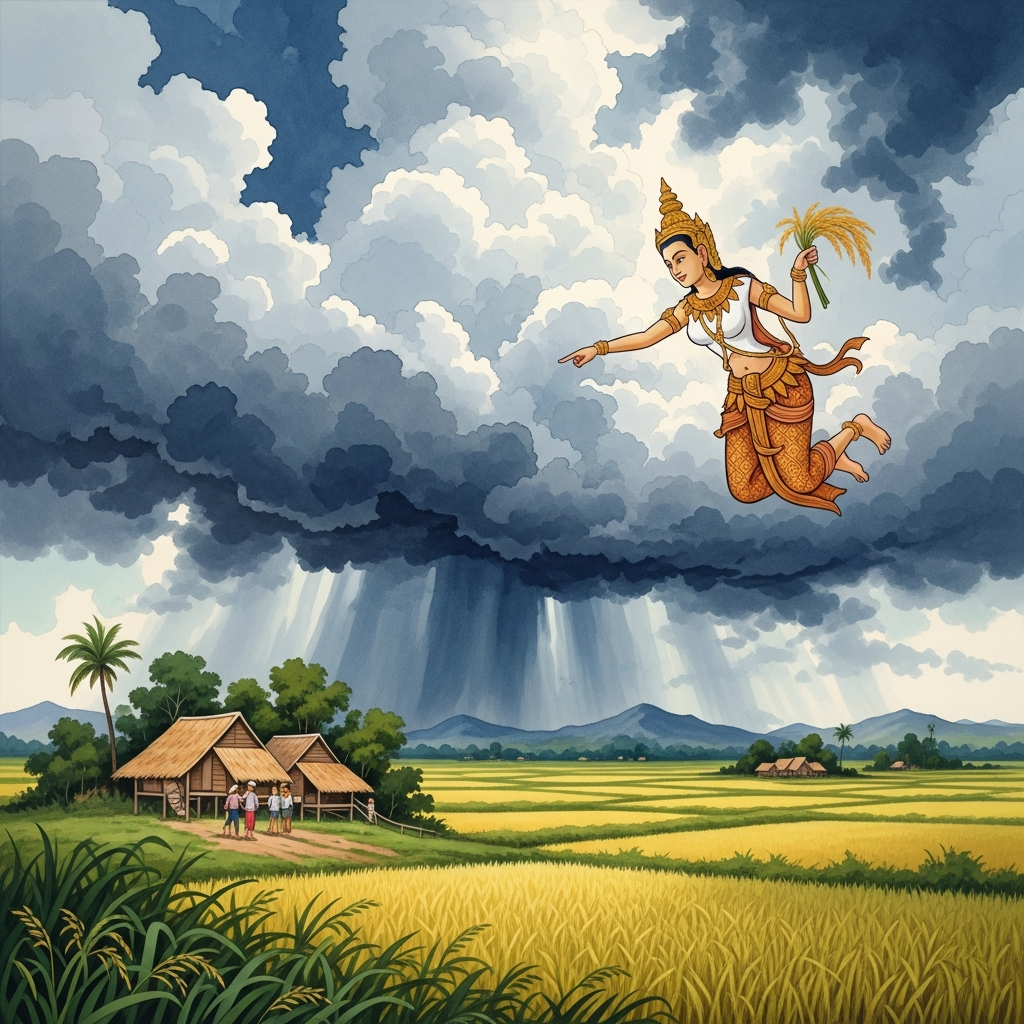
ព្រះឥន្ទ្រឃើញទង្វើនេះក៏ខ្ញាល់ជាខ្លាំង។ ព្រះអង្គបានបញ្ជូនវិញ្ញាណស្រូវ (ម្ចាស់ស្រូវ) មកប្រាប់មនុស្សថា៖ «អំណោយនេះមានតម្លៃ! បើអ្នកមិនគោរពទេ អ្នកនឹងត្រូវបាត់បង់វា»។
Indra, seeing this behavior, became intensely angry. He sent the Spirit of the Rice to tell the people: ‘This gift is precious! If you do not respect it, you will lose it.’
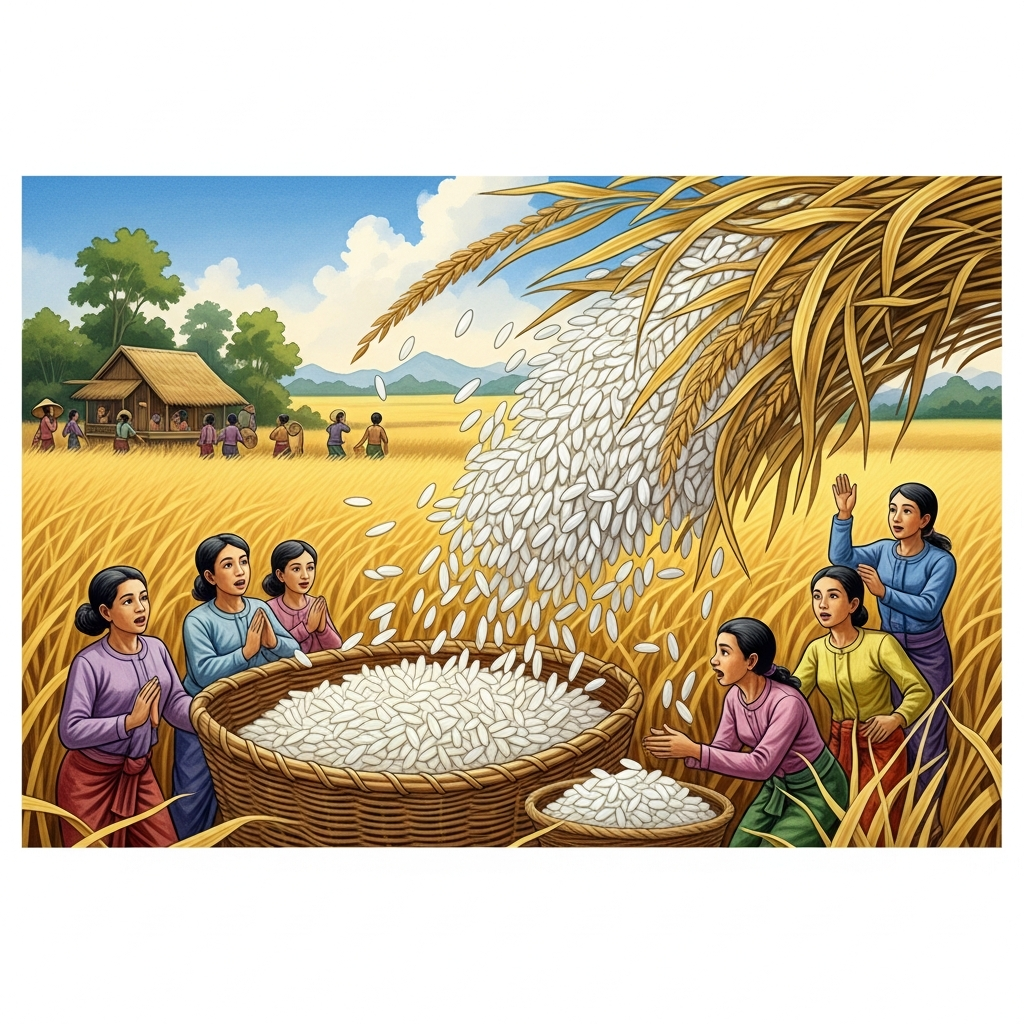
មនុស្សមិនបានស្ដាប់តាមការព្រមានឡើយ។ ភ្លាមៗនោះ វិញ្ញាណស្រូវក៏បានដកនូវភាពសម្បូរបែប និងទំហំរបស់វាចេញ។ គ្រាប់ស្រូវដ៏ធំៗក៏រួញតូច ហើយលាក់ខ្លួនក្នុងសំបក (អង្កាម) ដ៏រឹងមាំ ដើម្បីការពារខ្លួន។
Humans did not heed the warning. Immediately, the Spirit of the Rice withdrew its abundance and size. The giant grains shrank dramatically and hid themselves inside tough hulls (husks) to protect themselves.
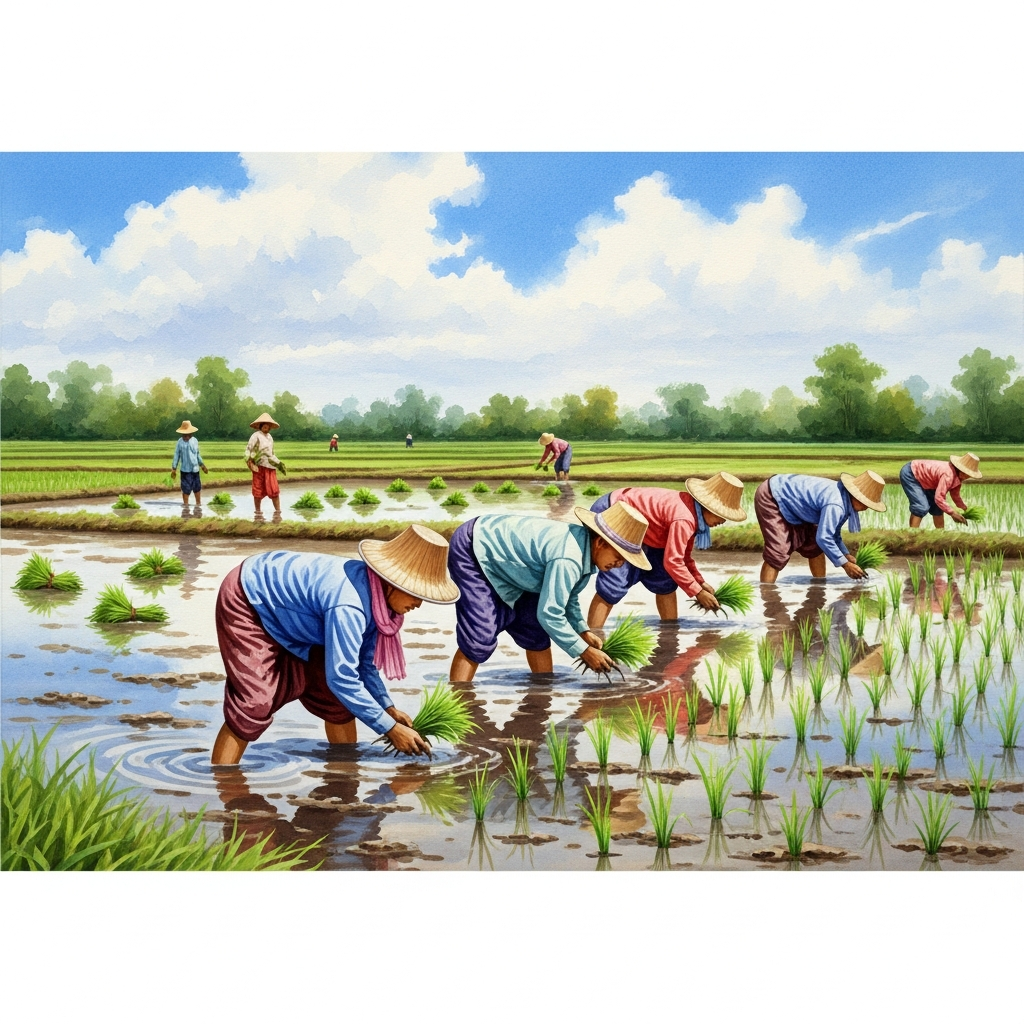
អ្នកតា មាស បានលុតជង្គង់អង្វរសុំអភ័យទោស។ គាត់ដឹងថានេះគឺជាទោសនៃការមិនដឹងគុណ។ ចាប់ពីពេលនោះមក មនុស្សត្រូវតែខិតខំប្រឹងប្រែង បកសម្បកស្រូវចេញ និងដាំដុះវាដោយការថែទាំបំផុត។
Ta Meas knelt down and begged for forgiveness. He knew this was the punishment for ingratitude. From that time forward, humans had to strive diligently, remove the husk, and cultivate the rice with the utmost care.

ស្រូវអង្ករនៅតែជាអំណោយដ៏ថ្លៃថ្លាពីមេឃដដែល។ រឿងនេះបានបង្រៀនមនុស្សជំនាន់ក្រោយថា រាល់អាហារដែលយើងទទួលទាន ទាមទារការគោរព និងការតស៊ូព្យាយាមក្នុងការងារ ទើបជីវិតមានសេចក្តីសុខ។
Rice remains a precious gift from the sky. This story taught future generations that every meal we consume demands respect and diligent effort in work for life to be happy and prosperous.